Hello fellow gardeners! You must have received one of our native seed packets. How exciting!!!!
One of the simplest and most impactful things we can do as a backyard conservationist is to grow native plants. In our current world of pesticides, herbicides, mowed lawns, and monoculture farms, diverse ecosystems are becoming increasingly rare. Our local wildlife depends on the native plants that they’ve evolved with for thousands of years! Even if it’s only in your little corner of the world, planting these native flowers will increase biodiversity, provide food/ habitat for our native friends, and even improve soil health. Not to mention the beauty they will provide for you and your neighbors! Seeing monarch butterflies on your milkweed or a family of chipmunks in the black-eyed Susans is sure to put a big smile on your face! Thanks for making the world a little better! Enjoy your flowers!!
How to plant:
Late Fall or Winter: Sprinkle seeds over bare dirt sometime in November/December, before the ground freezes solid. You can mix the seeds with sand before spreading to get a more even coverage of seed. Each seed packet contains enough seeds to cover up to 200 square feet. Tamp lightly and make sure the seeds make complete contact with the soil. The depth should be about twice the diameter of the seed. Be careful not to bury them too deep. They will cold stratify over winter and sprout come spring. They may not look like much in the first year. These native perennial (naturally reoccurring) plants will have to compete with the annual weeds, but after they have established their root systems (year two or three) they will tower over the nuisance weeds and hopefully choke them out. You can use the pictures below to help distinguish the native flowers from the weeds, but it will be hard when they are young. It is best to wait for the plants to mature a bit before trying to weed.
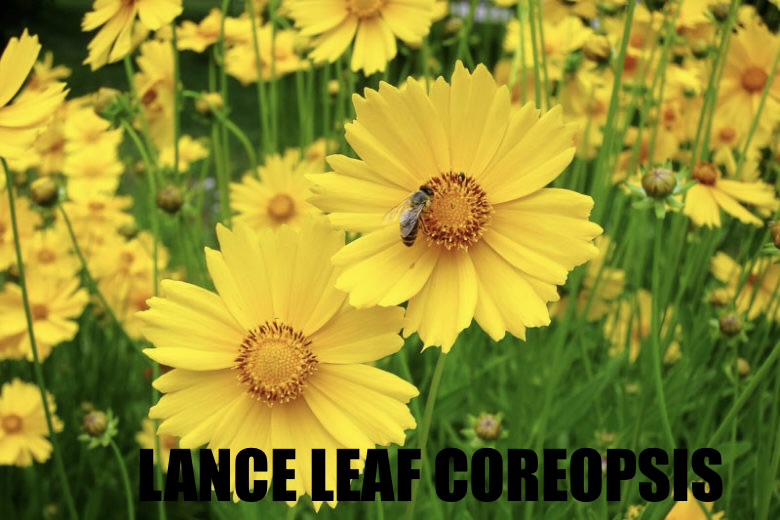
LANCELEAF COREOPSIS
(Coreopsis lanceolata)
Blooms: May-August
Grows up to 2’ tall. 8” long leaves, yellow flower heads on long stalks. Each head has 8-10 fan shaped petals. Abundant seeds provide food for birds. The dried flower heads make a great anti-inflammatory tea.
PURPLE CONEFLOWER
(Echinacea purpurpea)
Blooms: June-September
Grows up to 4’ tall. Flower heads grow on long stalks, 5” across with 10-20 reddish-purple petals surrounding a brown disc. Very useful plant. Used in teas and tinctures to help treat cold, flu, and upper respiratory infections. Lakota people used it to treat everything from snake bites to toothaches.

ILLINOIS BUNDLEFLOWER
(Desmanthus illinoiensis)
Blooms: June-August
Grows up to 4’ tall. Fern like with slender stalks that support small, flowered clusters about 1/2” across. Long stamens projecting from each flower gives it a fuzzy appearance. Improves soil fertility. Pawnee would boil the leaves to make a wash to relieve itching.

PURPLE PRARIE CLOVER
(Dalea purpurea)
Blooms: June-September
Slender leafy plant that grows up to 2’ tall. 1 to several stems coming from the base. 1” long leaves. Flowers are densely packed in a cylindrical head on top of stems. Pawnee would drink a root tea for general preventative medicine. Makes an excellent tea with a hint of citrus.

WHITE PRARIE CLOVER
(Dalea candida)
Blooms: May-October
Finely leaved plant growing up to 2’ tall. Smooth leaves growing up to 1 1/4” long. 1-3” Cylindrical white flower heads grow on top of stems. Pulverized and boiled root makes a great tea. Roots were also chewed for their sweet taste. Pawnee would use the tough stems as a broom.

PARTRIDGE PEA
(Chamaecrista fasciculata)
Blooms: June-October
Grows up to 2’ tall with alternating leaves, each divided into about 20 pairs of leaflets. 1-6 flowers, 1 1/2” across, grow at the axil of the leaf and stem. 5 yellow petals with a tinge of red at the base of each petal. Cherokees and settlers used the root for treating fevers, cramps and heart ailments. Suppresses aggressive weeds

UPRIGHT PRARIE CONEFLOWER
(Ratibida columnifera)
Blooms: May-October
Grows from 1-3’ tall. Deep lobed leaves at the base. Yellow, red, or bicolored drooping petals that surround a cylindrical disc. Boiled leaves and stems makes a wash to relief poison ivy and snake bites. Tea made of flowers and leaves helps treat headaches and stomachaches.

GREYHEAD CONEFLOWER
(Ratibida pinnata)
Blooms: June-September
Slender, hairy stemmed plant growing up to 5’ tall. 5-10 drooping yellow petals surround a 3/4” tall conical disk. Mesquakie used root to treat toothaches. Flower cones and leaves makes a good tea.

FALSE SUNFLOWER
(Heliopsis helianthoides)
Blooms: May-October
A spreading, branched plant that grows up to 5’ tall. 6” leaves are opposite on the stalk with flower head on top that’s 2-4” across. Up to 20 yellow petals surrounding a conical disk. Also called, ox-eye sunflower. Used as a tea to treat sore throats and colds.

BUTTERFLY MILKWEED
(Asclepias tuberosa)
Blooms: May-September
Bushy plant up to 3’ tall. Flower clusters on top of stems range from orange, red, and yellow. Several tribes referred to this plant as a healer with many beneficial uses. Important plant for monarchs. Larvae consume the leaves and the adults feed on the nectar.

COMMON MILKWEED
(Asclepias syriaca)
Blooms: May-August
Robust plant that grows up to 5’ tall. Stout stem, large leaves, and large dark pink flower clusters. Fruits are a pod that’s up to 4” long and filled with silky seeds. Another very important plant for monarch butterfly and humans. Monarchs only feed on the milkweed and is a vital plant to have.

BLACKEYED SUSAN
(Rudbeckia hirta)
Blooms: June-October
Shorter plant growing up to 1’-3’ tall. 5” long leaves that are alternate all along the stem. Yellow flower heads that are 2-3” across with 10-20 petals that surround a dark brown disc. Yellow petals have been used as dyes. Seed heads over winter act as a great food source for birds.
